
Things are a little “batty” here!
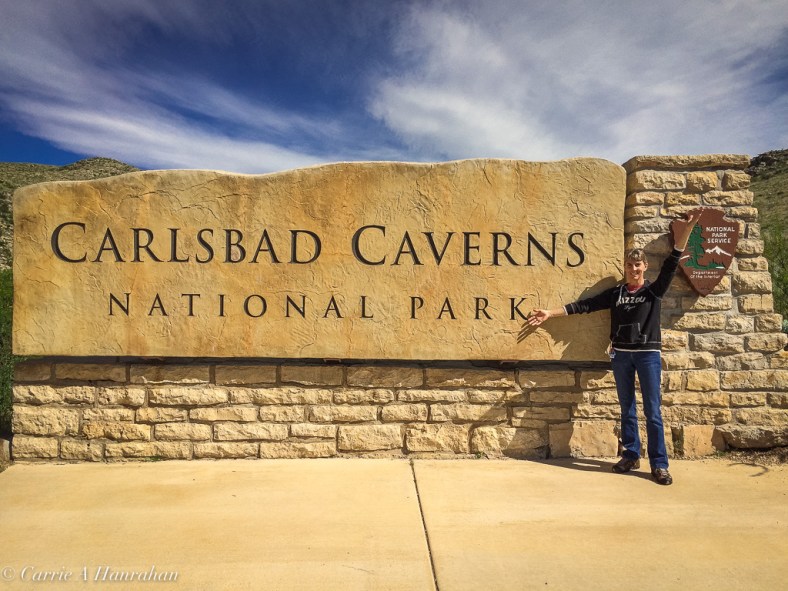
Carlsbad Caverns National Park is located in the Guadalupe Mountains and has a long and interesting history. The limestone cave was probably first entered by Jim White in 1898. In 1923 the General Land Office took surveys and created maps of the cavern, it then became a National Monument on October 25th of that year. The first cave trail was made in 1926 by the National Park Service followed by the first wedding in 1927. In 1930 the caverns were finally pronounced a National Park and were given the designation of a World Heritage Site in 1995.
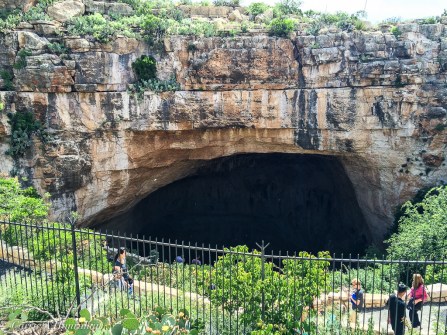
The Natural Entrance Trail is a 1.25 mile self-guided hike that has a quite steep entrance.
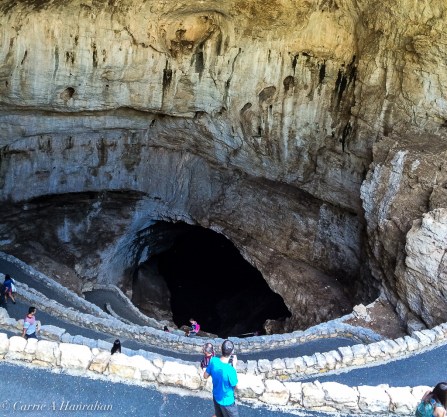
Looking back up at the entrance hole, you can imagine the wonder of the first explorers of this amazing discovery.

As you continue on the hike you will see a variety of formations within the cave. The majority are now inactive formations due to the dry desert climate above. If the climate conditions were to ever change and become moist, then the formations would become active again and continue to grow.
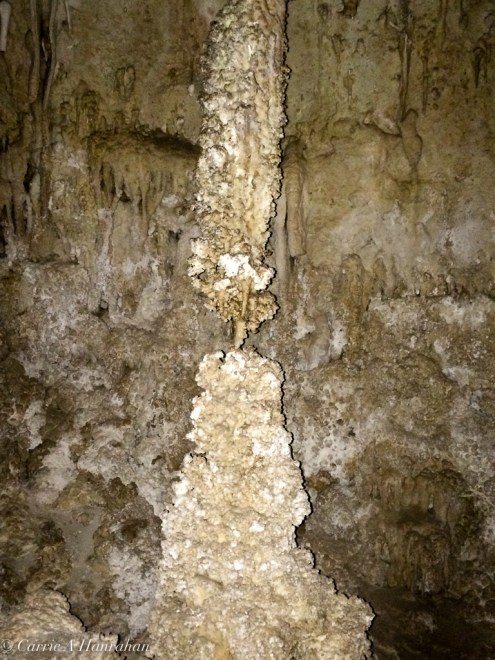
A stalagmite and stalactite have almost come together.


These images show Flowstone and Popcorn formation development in the cave.
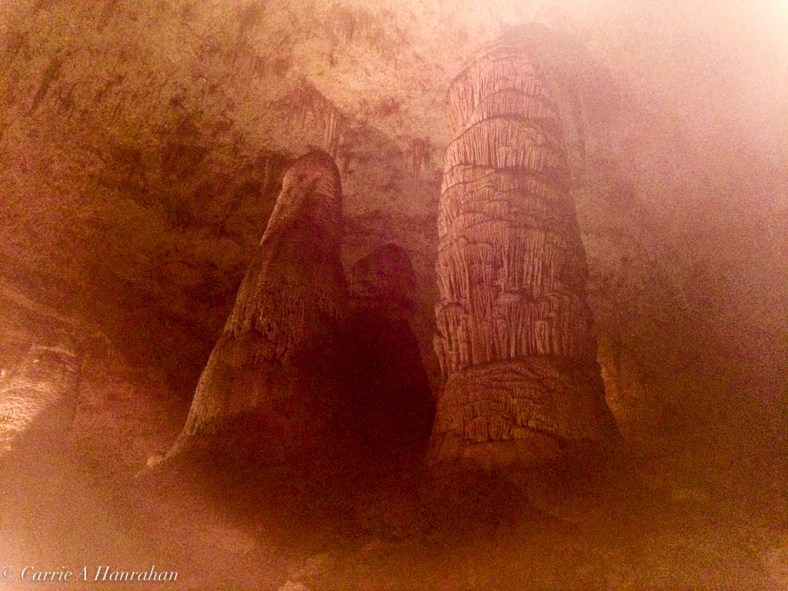
And sometimes you just get a cool photo when your camera lens fogs up in a cave.
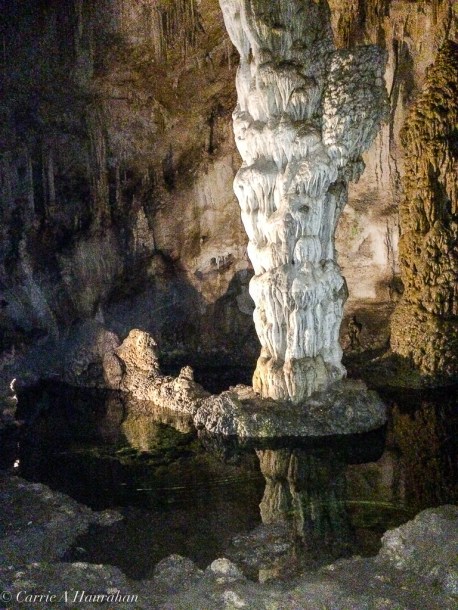
Devils Spring contains a beautiful column formation that reflects in the pool.
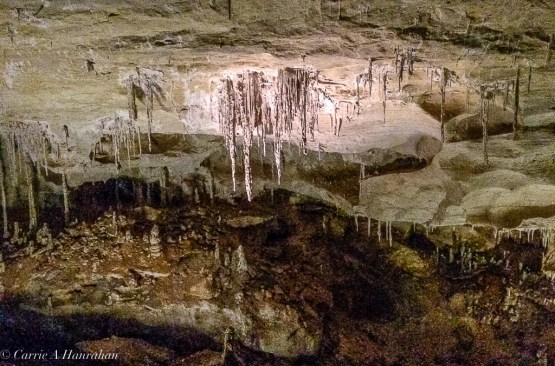
Soda Straws cling to the ceiling. These are the beginning formations of a stalactite.
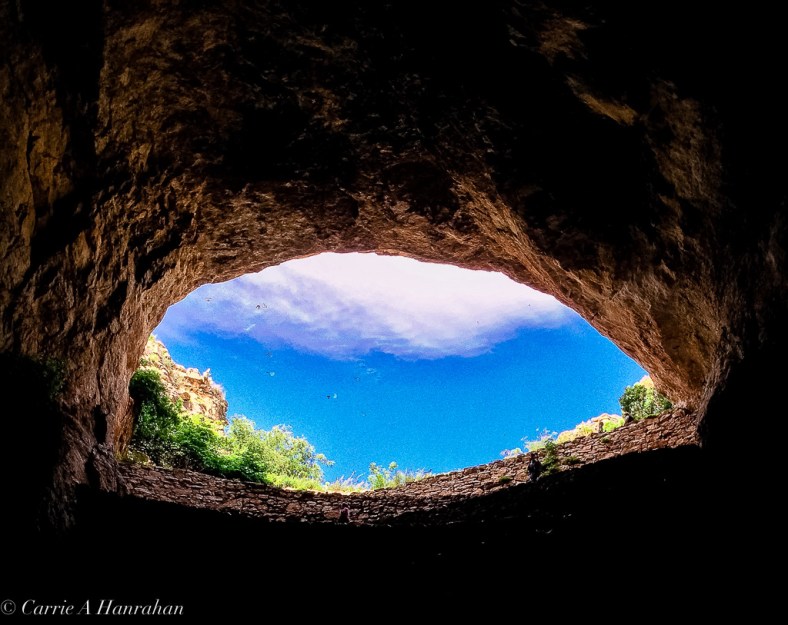
From spring to fall, the natural entrance is the stage for the nightly outflights of the Brazilian Free-Tailed bats. Several hundred thousand bats exit the cave at twilight and fly over the amphitheater only to return at dawn. If you look closely, you can see a few bats flying during the day.
Carlsbad Caverns National Park is an amazing place to explore. There are more trails to hike than I have talked about. An the area surrounding is beautiful.
To plan your own adventure, head to http://www.nps.gov/cave
 Carrie Hanrahan Photography